
Role of Expert Witnesses in Accident Cases Explained
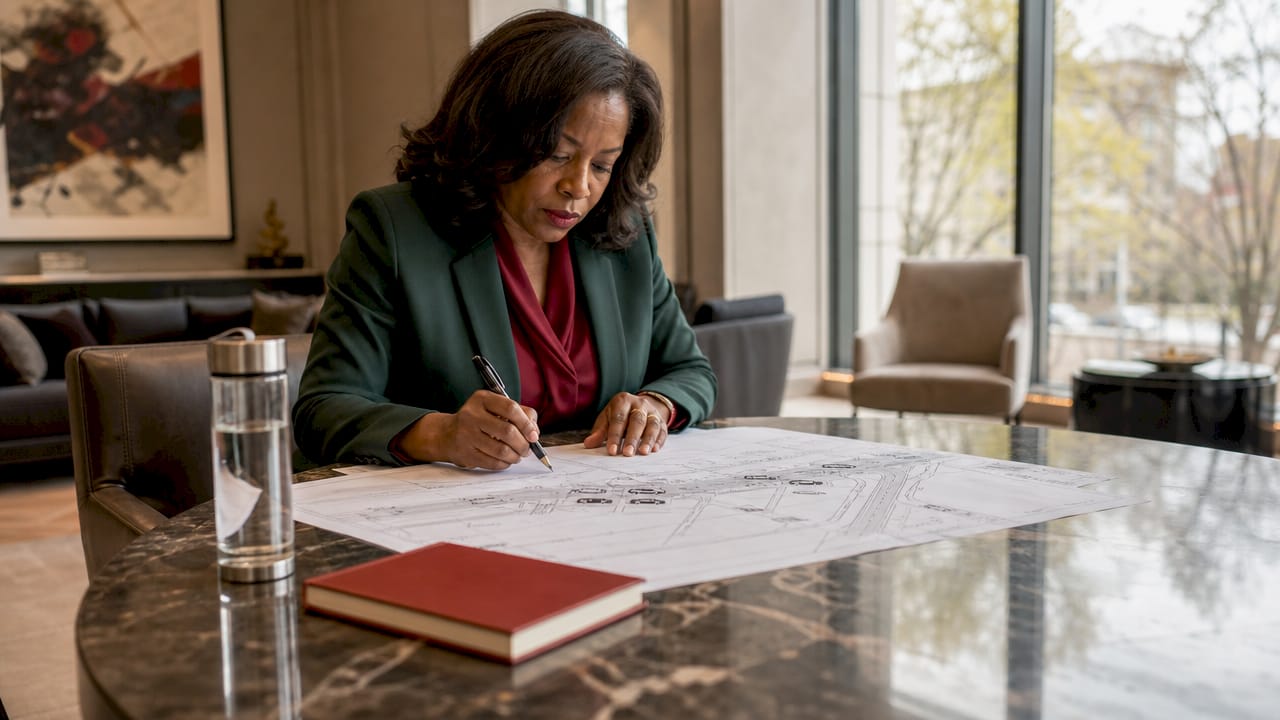
Expert witnesses in accident cases are defined as qualified professionals who translate specialized technical, medical, or scientific knowledge into terms that judges and juries can understand and apply to legal decisions. The role of expert witnesses in accident cases is not simply to testify. It is to fill the knowledge gap between what happened and what the court can reasonably interpret without specialized training. Whether you are dealing with a car crash, a workplace injury, or a boating accident, expert testimony often determines who is liable and how much compensation you receive. Understanding how these witnesses work gives you a clearer picture of what your case actually requires.
What legal standards govern expert witness testimony in accident cases?
Expert witness testimony is admissible in court only when it meets specific legal requirements. The Federal Rules of Evidence, along with state counterparts, set the framework. Under these rules, five criteria must be satisfied: the witness must be qualified, the testimony must assist the fact-finder, the opinion must be based on sufficient data, the methods used must be reliable, and those methods must be properly applied to the facts of the case. Failing any one of these requirements can result in the testimony being excluded entirely.
Pre-trial motions are the primary mechanism for challenging expert admissibility. The opposing party can file what is commonly called a Daubert motion, asking the judge to review whether the expert’s methodology meets the legal standard before the jury ever hears a word. This is not a minor procedural step. A successful challenge can strip a party of their most persuasive evidence.
There is also an important distinction between retained and non-retained experts. Retained experts must produce formal, signed written reports outlining their opinions and the basis for each conclusion before trial. Non-retained experts, such as treating physicians, may testify based on their direct involvement in a case but often face different scope limitations. Inadequate disclosure of a retained expert’s report can bar that testimony entirely, which is why early and thorough preparation matters.
Pro Tip: Involve your expert witness early in the litigation process, not just before trial. Early involvement allows the expert to shape the investigation, identify missing evidence, and produce a report that withstands pre-trial challenges.
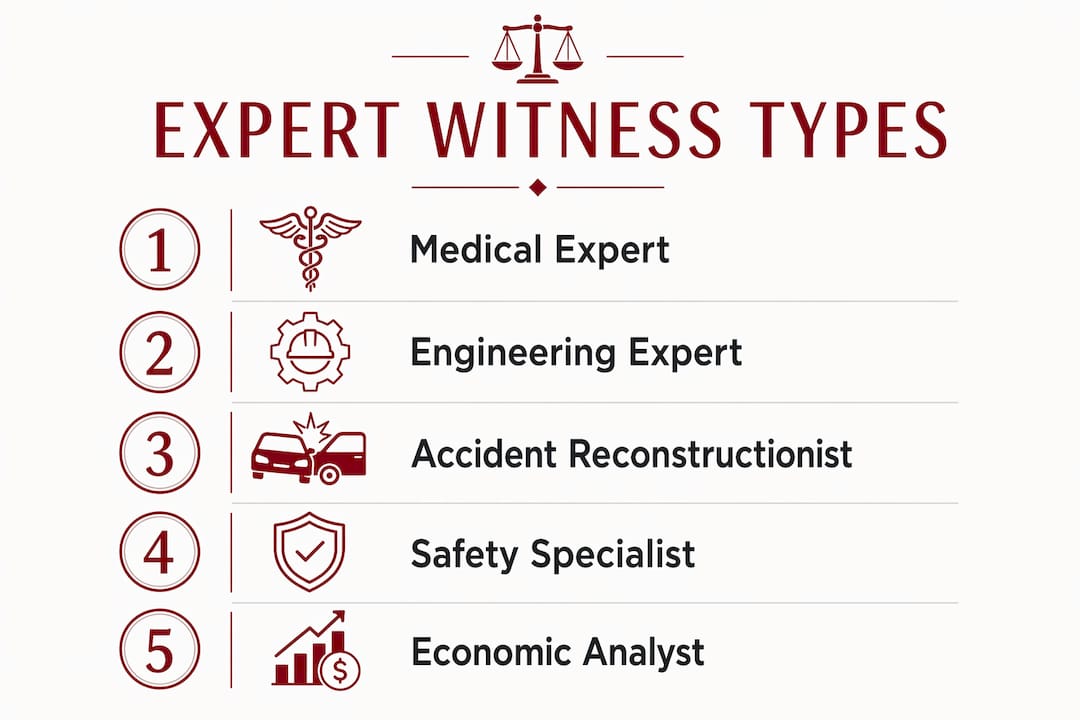
Which types of experts commonly appear in accident cases?
Different accidents require different types of specialized knowledge. The following experts appear most frequently in accident litigation:
- Medical experts (orthopedic surgeons, neurologists, psychiatrists): These professionals assess injury severity and establish a causal link between the accident and the harm suffered. They also explain long-term effects on a person’s ability to work and function in daily life.
- Accident reconstructionists: These experts analyze vehicle mechanics, braking patterns, and collision dynamics to establish exactly how an accident occurred. Accident reconstructionists provide technical evidence that eyewitness accounts simply cannot replicate with the same precision.
- Economic experts: These witnesses calculate lost wages, reduced earning capacity, and other financial damages. Their testimony converts abstract injury impacts into concrete dollar figures for the jury.
- Vocational experts: These professionals assess whether an injured person can return to their prior occupation or any occupation at all, which directly affects the damages calculation.
- Life care planners: These experts project the cost of future medical care, rehabilitation, and support services over a person’s lifetime.
| Expert Type | Primary Contribution |
|---|---|
| Medical expert | Links injuries to the accident and explains long-term health impact |
| Accident reconstructionist | Establishes how and why the collision occurred |
| Economic expert | Quantifies financial losses including lost wages and future income |
| Vocational expert | Assesses ability to return to work after injury |
| Life care planner | Projects lifetime costs of ongoing medical and personal care needs |
Each expert addresses a different dimension of your case. A strong accident claim typically requires more than one type of expert working together to build a complete picture of liability and damages.
How do expert witnesses present complex evidence to judges and juries?
The technical accuracy of an expert’s opinion is only half the equation. How that opinion is communicated determines whether it actually influences the outcome. Expert witnesses must use plain language rather than technical jargon, because jurors who cannot follow the testimony cannot be persuaded by it. An expert who speaks in dense medical or engineering terminology may be brilliant in their field and completely ineffective in a courtroom.
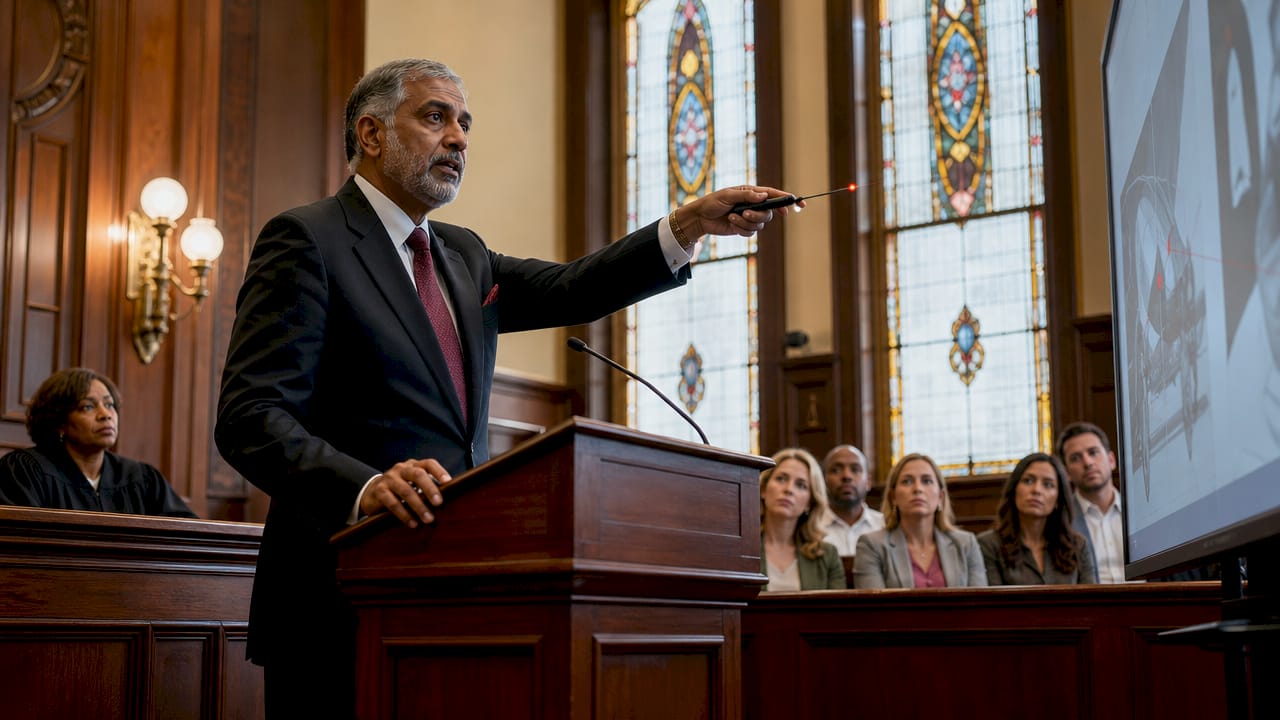
Credibility and neutrality are equally critical. The jury’s perception of an expert’s demeanor and clarity often carries as much weight as the expert’s actual credentials. An expert who appears biased toward the hiring party loses credibility fast. Jurors notice when a witness seems to be advocating rather than analyzing.
Common pitfalls in expert testimony include:
- Speaking in academic language that alienates lay jurors
- Appearing defensive or combative under cross-examination
- Overstating certainty in areas where the science is genuinely contested
- Failing to acknowledge limitations in their own methodology
Cross-examination strategy also matters significantly. Effective cross-examination targets gaps in the opposing expert’s investigation rather than attacking their final conclusions head-on. Pointing out what the expert did not examine, did not test, or did not consider is far more effective than arguing with their stated opinion. This approach exposes methodological weaknesses without turning the cross-examination into a debate the expert is likely to win.
Pro Tip: When evaluating an expert for your case, ask them to explain their opinion as if speaking to a neighbor with no legal or technical background. If they struggle to do that, they will likely struggle in front of a jury.
How does expert testimony impact accident case outcomes?
Expert testimony shapes accident case outcomes at two distinct stages: settlement negotiations and trial. Expert testimony often pressures insurance companies to reevaluate their settlement offers, frequently resulting in higher compensation before the case ever reaches a courtroom. An objective, data-backed expert opinion signals to the opposing side that your case is prepared and credible.
At trial, the impact is even more direct. Experts clarify disputed facts that would otherwise remain ambiguous for the jury. In a truck accident case, for example, an accident reconstructionist can establish that the driver was traveling above the speed limit at the moment of impact, a fact that eyewitness testimony alone may not prove convincingly. In a wrongful death claim, a life care planner and economic expert working together can present a damages figure that accounts for decades of lost income and care costs.
The following factors determine how much influence expert testimony carries in a given case:
- Complexity of the disputed facts: The more technical the issue, the more the jury depends on expert guidance.
- Quality of the expert’s report: A thorough, well-documented report withstands cross-examination and builds credibility before trial begins.
- Expert’s communication ability: Clear, calm, and neutral testimony is more persuasive than technically superior but confusing testimony.
- Opposing expert quality: When both sides retain experts, the jury often decides based on which expert they found more believable and easier to follow.
In contested cases where liability is genuinely disputed, expert evidence is frequently the deciding factor. Without it, a party asking the jury to accept a complex causation theory is asking them to take a leap without a guide.
Key takeaways
Expert witnesses are the mechanism by which complex accident evidence becomes legally actionable, and their effectiveness depends equally on technical credibility and clear communication.
| Point | Details |
|---|---|
| Admissibility requirements | Expert testimony must meet five legal criteria or risk exclusion before trial. |
| Types of experts matter | Medical, reconstruction, economic, and vocational experts each address a distinct part of your claim. |
| Communication drives persuasion | Plain language and neutral demeanor determine how much weight a jury gives expert testimony. |
| Settlement impact | Strong expert evidence pressures insurers to increase offers before a case reaches trial. |
| Early involvement is critical | Bringing experts in early shapes the investigation and strengthens pre-trial disclosures. |
What I have learned about choosing the right expert witness
After handling accident cases across Stuart and Port St. Lucie, I have seen one pattern repeat itself more than any other: attorneys who treat expert selection as a last-minute task consistently underperform those who treat it as a strategic decision made at the start of litigation. The expert is not a supporting character. In complex accident cases, the expert is often the case.
The mistake I see most often is prioritizing credentials over communication. A neurologist with 30 years of clinical experience who cannot explain a traumatic brain injury to a jury without using Latin terminology is less valuable than a slightly less credentialed expert who can make that same injury real and understandable to 12 ordinary people. Juries decide cases. Juries are not medical boards.
I also want to address something that does not get said enough: expert witnesses provide objective analysis, not advocacy. The moment an expert appears to be working for your side rather than telling the truth, opposing counsel will exploit that perception. The best experts I have worked with are the ones who would say the same thing regardless of who hired them, because their opinion is grounded in the evidence, not the outcome.
Finally, do not underestimate the settlement value of a well-prepared expert. Insurance adjusters read expert reports. When those reports are thorough, clearly reasoned, and authored by a credible professional, they change the math on the other side of the negotiation table. That is leverage you build before trial, not during it.
How Jeff T. Gorman Law Offices helps accident victims with expert witness strategy
If you are involved in an auto accident claim in Stuart or Port St. Lucie, FL, the quality of your expert witnesses can determine the outcome of your case. At Jeff T. Gorman Law Offices, we do not wait until the week before trial to think about expert strategy. We identify the right experts early, manage disclosure requirements carefully, and prepare testimony that holds up under cross-examination.
Jeff T. Gorman Law Offices serves clients across the Treasure Coast with direct attorney access and 24/7 availability. You speak with the attorney handling your case, not a paralegal. Every initial consultation is free and confidential. If your accident case requires expert witnesses to prove liability or damages, contact Jeff T. Gorman Law Offices today to discuss your options with an attorney who takes cases to trial.
FAQ
What is the role of expert witnesses in accident cases?
Expert witnesses interpret technical, medical, or scientific evidence that courts cannot evaluate without specialized knowledge. They help establish causation, liability, and the full extent of damages in accident litigation.
How does expert testimony affect a settlement?
Strong expert evidence signals case preparedness to insurance companies, which frequently results in higher settlement offers before trial. Objective, data-backed testimony shifts the negotiation in the injured party’s favor.
What qualifications must an expert witness have?
An expert witness must be qualified by education, training, or experience in the relevant field, and their testimony must be based on sufficient data and reliable methods under the Federal Rules of Evidence.
What is the difference between a retained and non-retained expert?
Retained experts are hired specifically for litigation and must produce formal written reports before trial. Non-retained experts, such as treating physicians, testify based on their direct involvement and face different disclosure requirements.
Can expert testimony be excluded from an accident case?
Yes. A judge can exclude expert testimony through a pre-trial motion if the expert fails to meet admissibility standards, including qualifications, reliable methodology, or proper application of methods to the case facts.
Recommended
- Auto Accident Attorney | Stuart & Port St. Lucie FL | Jeff T. Gorman Law Offices
- Truck & Motorcycle Accident Attorney | Stuart & Port St. Lucie FL | Jeff T. Gorman Law Offices
- Boating Accident Attorney | Stuart & Port St. Lucie FL | Jeff T. Gorman Law Offices
- Slip & Fall Attorney | Stuart & Port St. Lucie FL | Jeff T. Gorman Law Offices
Article generated by BabyLoveGrowth